• As Cinqo de Mayo approached there was a lot of talk about pozole. I couldn’t recall hearing about the pre-Columbian Mexican soup prior to this year and it captured my interest. There are several different versions of pozole, but the most intriguing was pozole rojo, made with hominy, chillies and, usually, pork. I didn’t make it to the Honolulu’s Cinqo de Mayo celebration to try Zaratez‘ take on pozole, but hit up Serg’s, a place near my house that makes some really good tacos. For Cindqo de Mayo they offered a pozole verde, which was greasy, salty, and a huge disappointment. It became clear to me that I would have to take matters into my own hands.

    Mercado De La Raza is the only Mexican grocery that I know of on island and was naturally my first stop for ingredients. I picked up dried chilies, some really funky purple corn, and cal (calcium hydroxide). The total was only $4! I went to my usual purveyor of pig in Chinatown and picked up half of a head. The butcher lady was a little put off by my wanting an half of a head instead of my usual jowl. Her confusion and the language barrier led to me getting a boneless half head, but it didn’t end up affecting the outcome.

    Pig Head Pozole:
    pig head (1/2 head) *shave or burn off any hair
    hominy (made from 1 lbs dried corn and cal)
    dried chilies (4 hot, 4 medium)
    onion (1)
    garlic (8 cloves)
    carrot (1)
    celery (1 stalk)
    pork stock (2 cups homemade frozen concentrate)
    water
    cumin
    chili powder
    salt
    pepper

    Garnish:
    crispy pig ear
    cilantro
    radish
    cabbage
    avocado
    lime

    The party started with sautéing 1/2 of the onion in a big, heavy pot, then throwing in the carrot, celery, and a few cloves of garlic before adding the head, pork stock, and water. I added cumin, salt, and pepper, brought everything to a boil and let it simmer for about 5 hours, periodically skimming the surface.


    Once everything was under control with the soup, I moved on to the hominy.
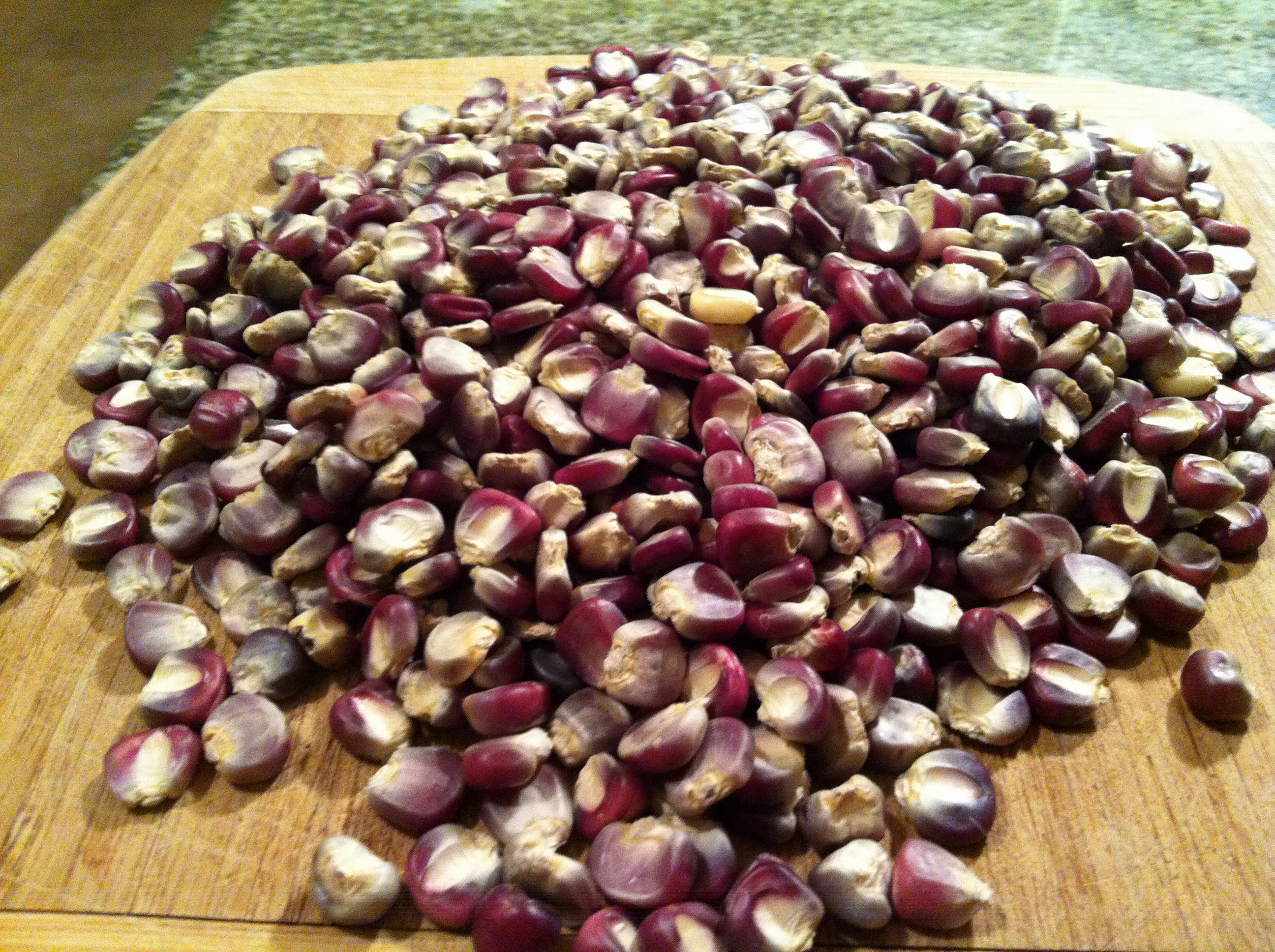
    Seriously beautiful corn!
    Seriously beautiful corn!

    I filled another big, heavy pot with water, added the corn and the cal, and brought it to a boil. I let it simmer for about 3 hours, then shut off the heat and left it on the stove overnight.
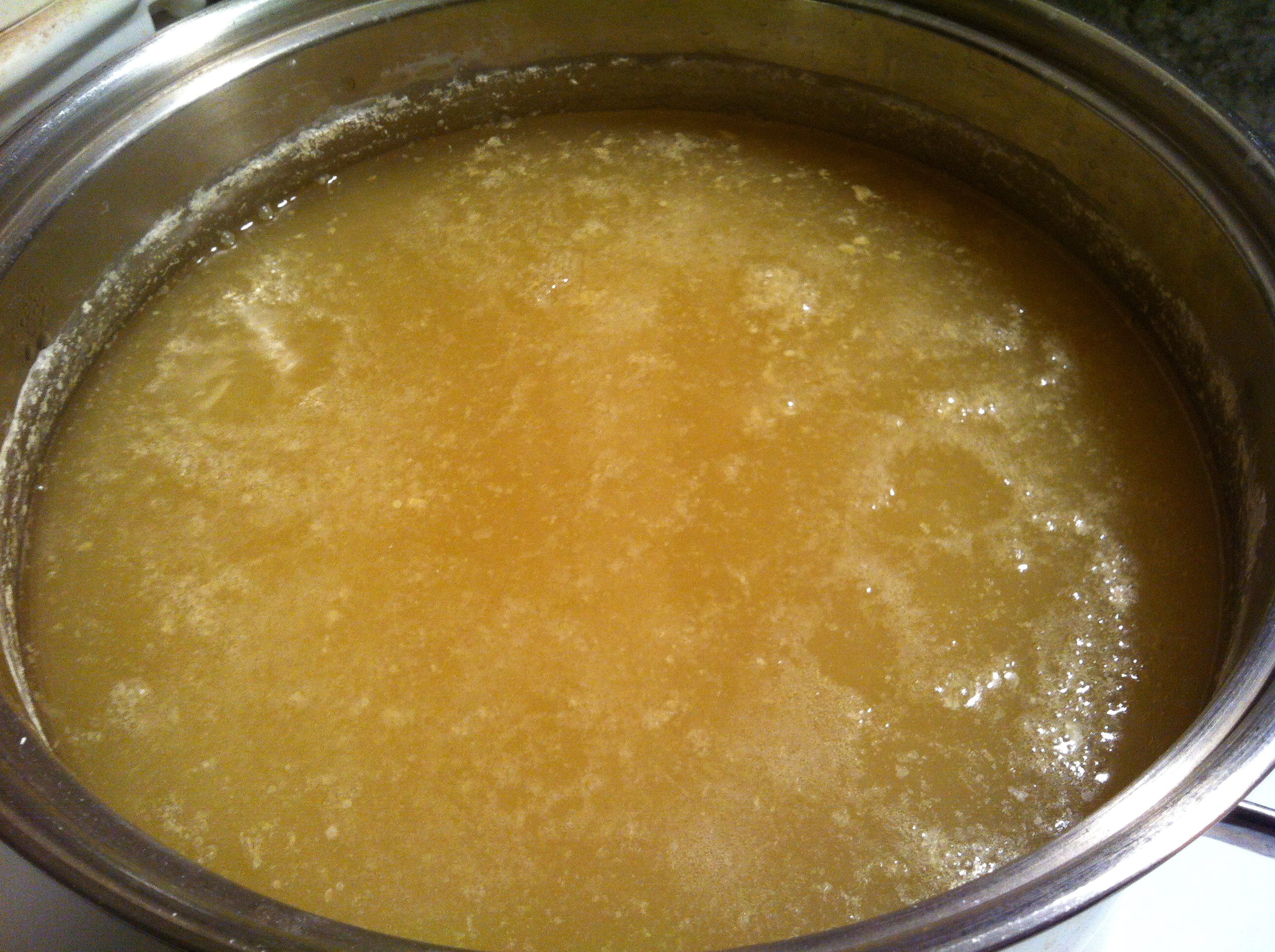
    The pot with the corn turned a vivid gold.
    The pot of corn turned a vivid gold.

    After about 5 hours, I removed the soup from the heat, strained the liquid, pulled apart the head meat, then refrigerated both overnight.

    Walking the Snout to Tail walk.
    Walking the snout to tail walk.

    The next day, I skimmed off the fat from the surface of the now congealed broth (which was surprisingly very little) and brought it back to a boil. Next, I chopped the gelatinous chunk of meat into manageable pieces and added them to the broth. I drained the corn and rinsed it several times to be sure to remove all traces of the cal, then added it to the soup.


    Prior to cooking the head, I removed the ear and set it aside. At this time, I put the ear in a small pan with water and brought it to a boil. I dumped out the scummy water, replaced it with fresh water and returned the ear to a boil. I added cumin, chili powder, salt and pepper, then simmered the ear for about 2.5 hours. While this was going on, I toasted my chilies, then sauteed the other half onion and garlic in the fat I scraped off from the top of the broth. I removed the ear from the pan and used the liquid to rehydrate the chilies, which took about 30 minutes. I put the chillies, onion, and garlic into the food processor with a little of the rehydrating liquid and pulsed it into a paste.
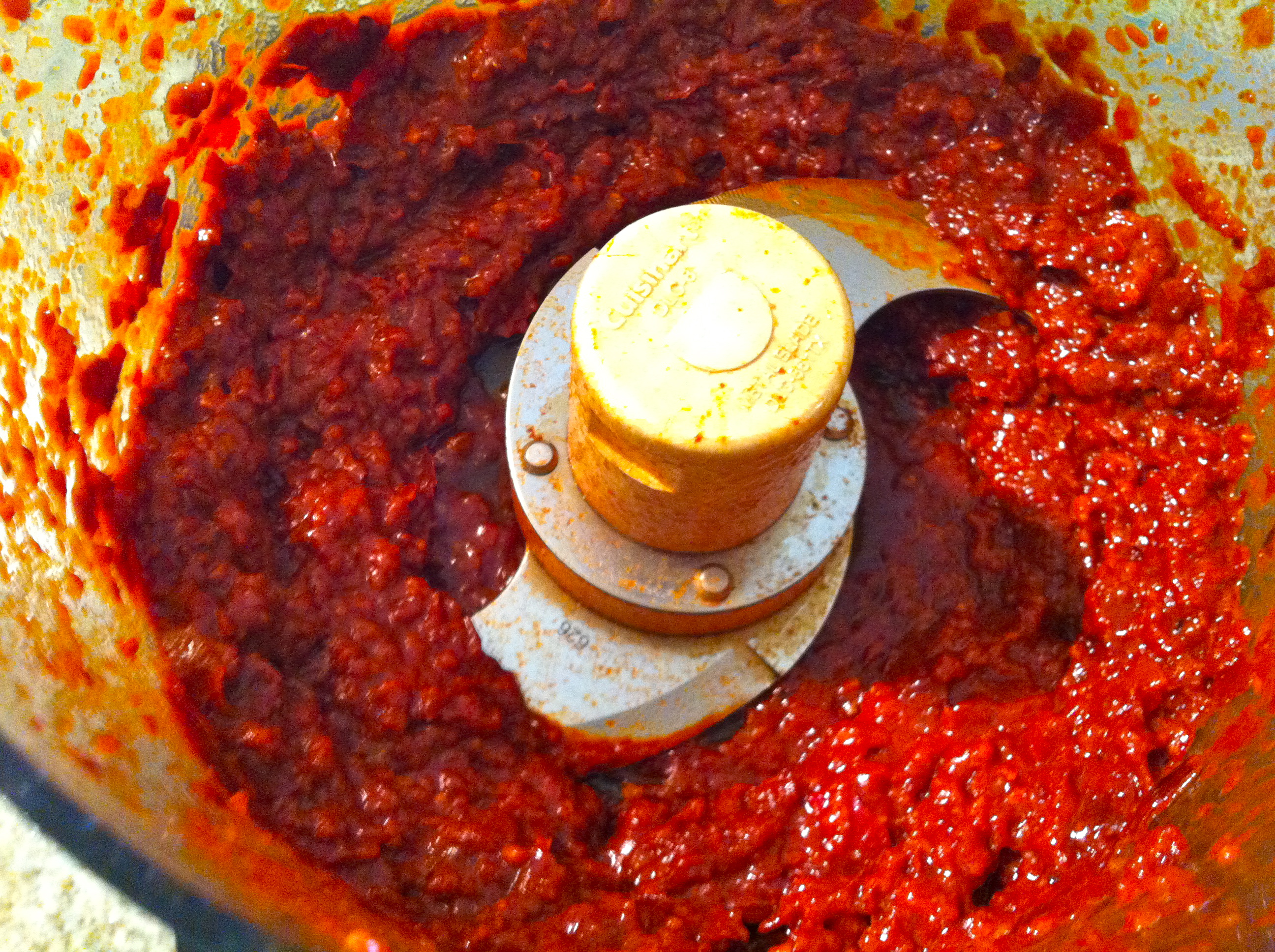

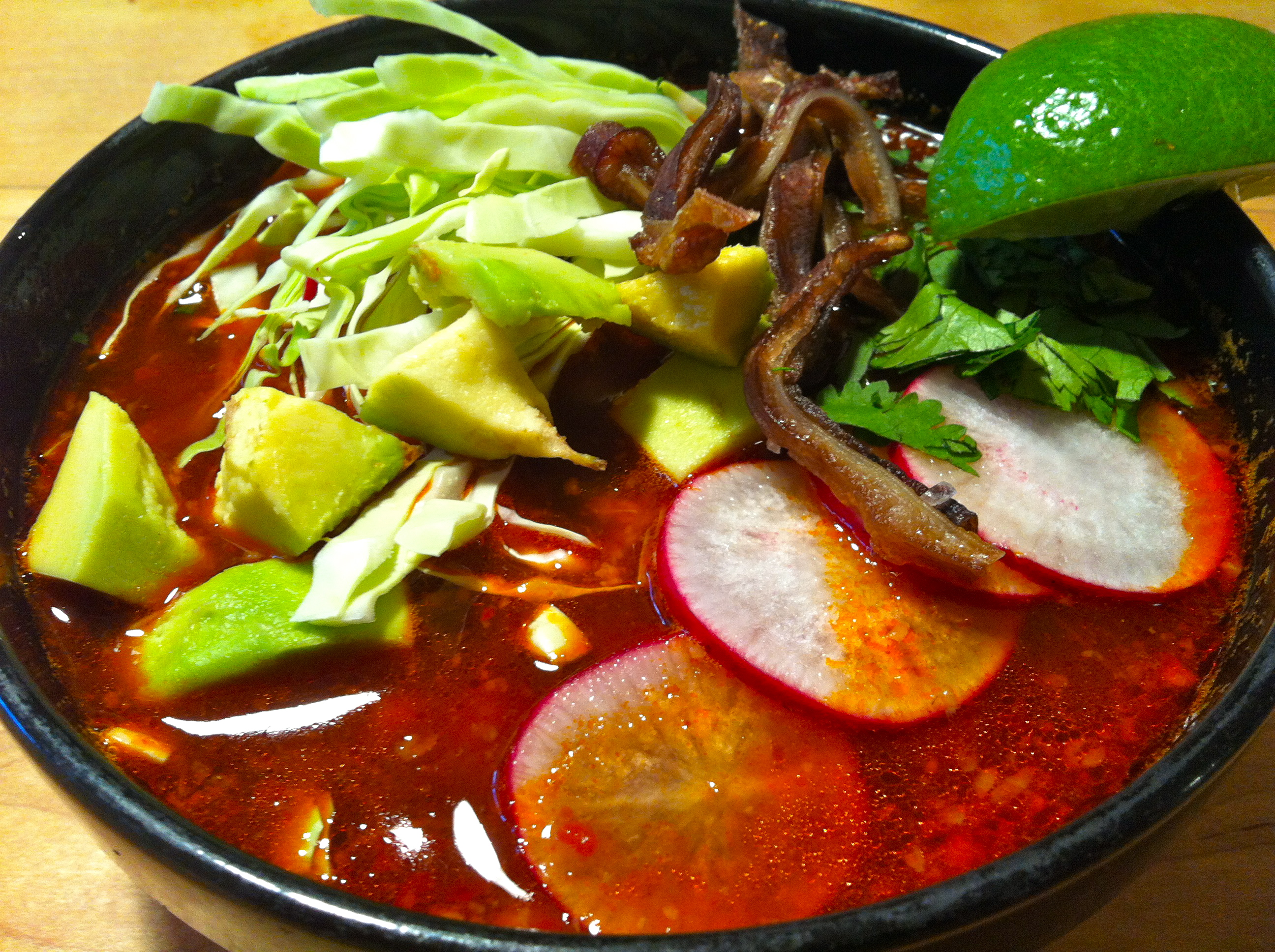
    I added the chili paste to the soup and let it simmer for a few hours. That was pretty much it for the soup. I cut the ear into thin strips, sprinkled them with sea salt and put them under the broiler. For garnish I went with the ear, avocado, radish, cabbage, cilantro, and lime.


    The slices of ear lost their crispiness once they met the broth and will not be including in future pozole endeavors. I also forget Mexican oregano when I was at the market and will be including it next time around. The broth was really good, full of porky richness and a nice amount of heat. The meat was tender, pieces of skin like butter, and the hominy very bean-like. There are relatively few ingredients involved and the only solids in the soup itself are pork and hominy. The garnishes provided interesting textures and, with the exception of the not-so-crispy crispy pig ear, everything in the bowl got along swimmingly. I’m my own harshest critic and was very pleased with the outcome. I have a new favorite soup!
    Orale!
    Orale!

  • Last Saturday at the KCC farmers market, my friend Nanette let me know that Hawaiian Red Veal had brought some offal to sell, including two tongues. I’ve eaten tongue, but this would be my first time cooking it. MA’O Organic Farms had some baby root vegetables that looked like the perfect companion for the tongue.

    Pinot Braised Hawaiian Red Veal Tongue:
    Hawaiian Red Veal tongue (about 1.25 lbs)
    guanciale (2 1/4″ slices from my home cured guanciale, cut into 1/4″ strips)
    butter (2T for the guanciale, 1T for roux, 1T for mushrooms)
    shallots (4, quartered, from Pit Farm)
    carrots (1 purple, 1 yellow, from Pit Farm)
    celery (1 stalk, from Pit Farm)
    roma tomatoes (3, skinned and cored, from Ho Farms)
    garlic (2 cloves, smashed)
    thyme (3 sprigs)
    bay leaves (2 from tree at my house)
    wine (about 3 cups of pinot noir)
    chicken stock (1-2 cups, homemade)
    Hawaiian sea salt
    black pepper
    parsley (from my garden for garnish)
    Small Kine Farm baby portabella mushrooms (handfull, halving the bigger ones)


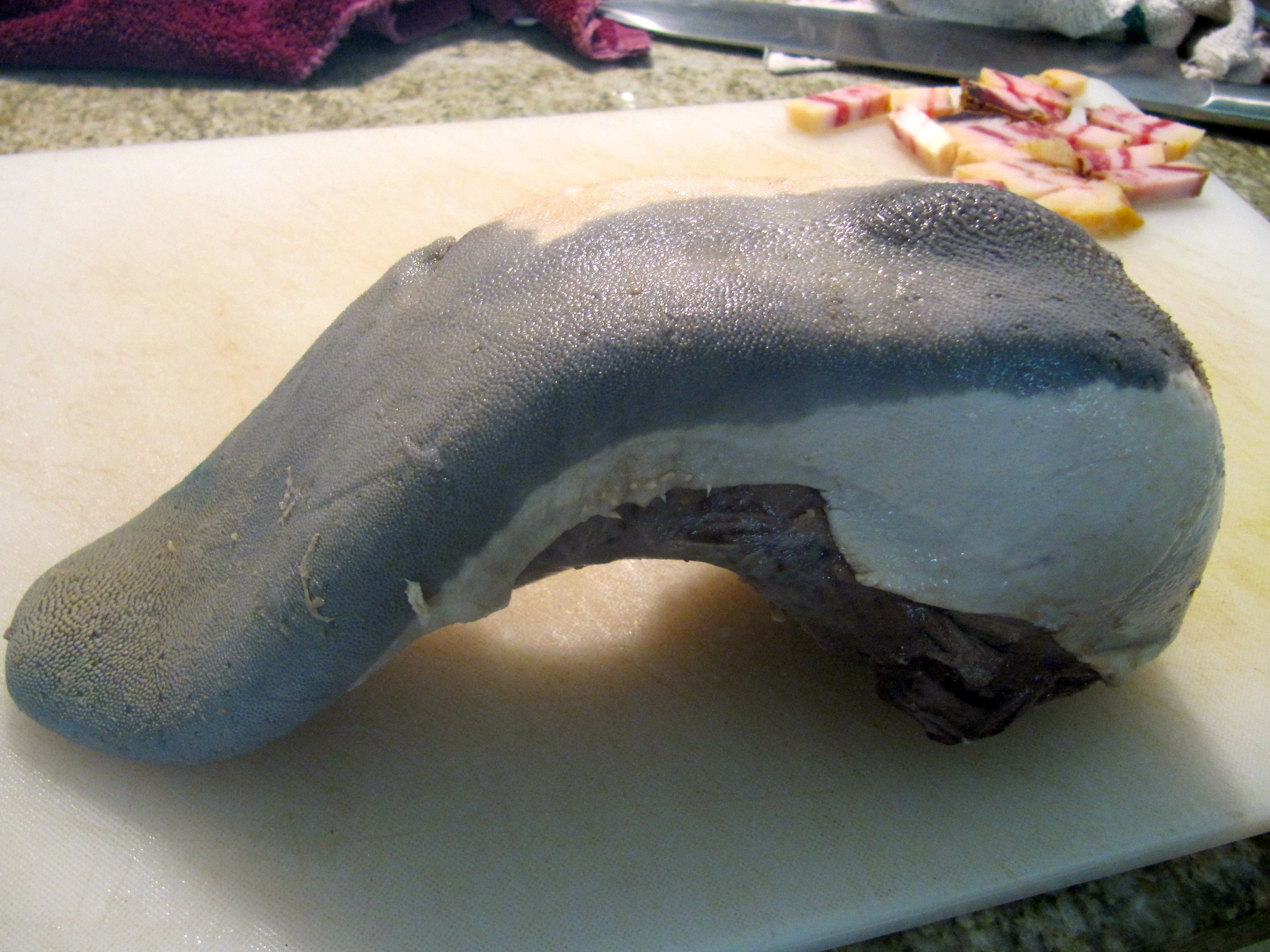
    Once in the kitchen, the first thing I had to do was remove the skin from the tongue. I simmered the tongue in water for 1 hour

    then removed the skin with a knife.

    Next, I rendered the fat out of the guanciale in butter, then removed the guanciale.

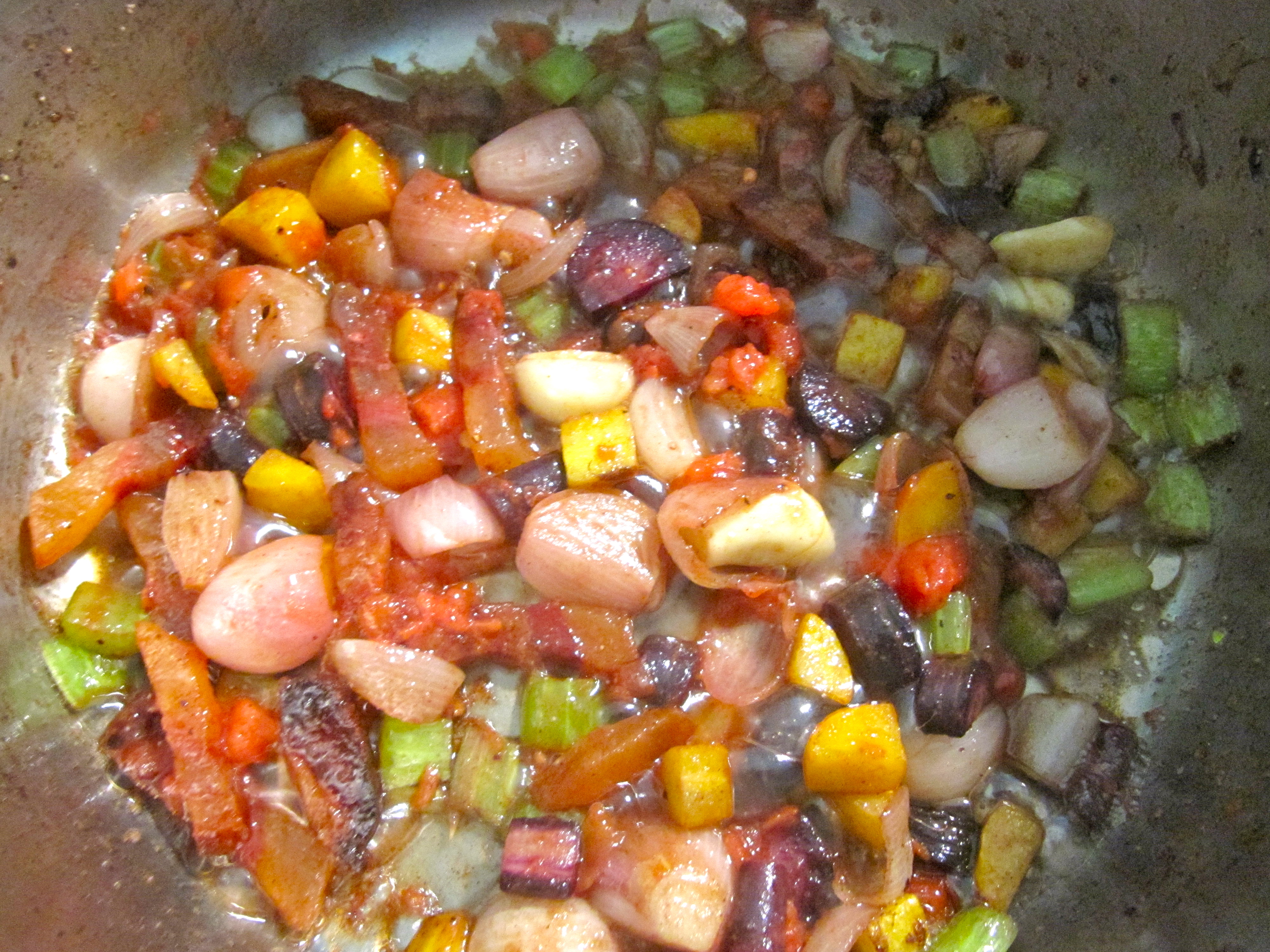
    I browned the lightly floured tongue in the guanciale fat/butter and set it aside. Next, I added shallot, carrot, and celery to the pan. When they were about ready, I added the garlic, then the tomato. I returned the tongue and the guanciale to the pan, then added the wine, chicken stock, thyme, and bay leaves and seasoned with salt and pepper.

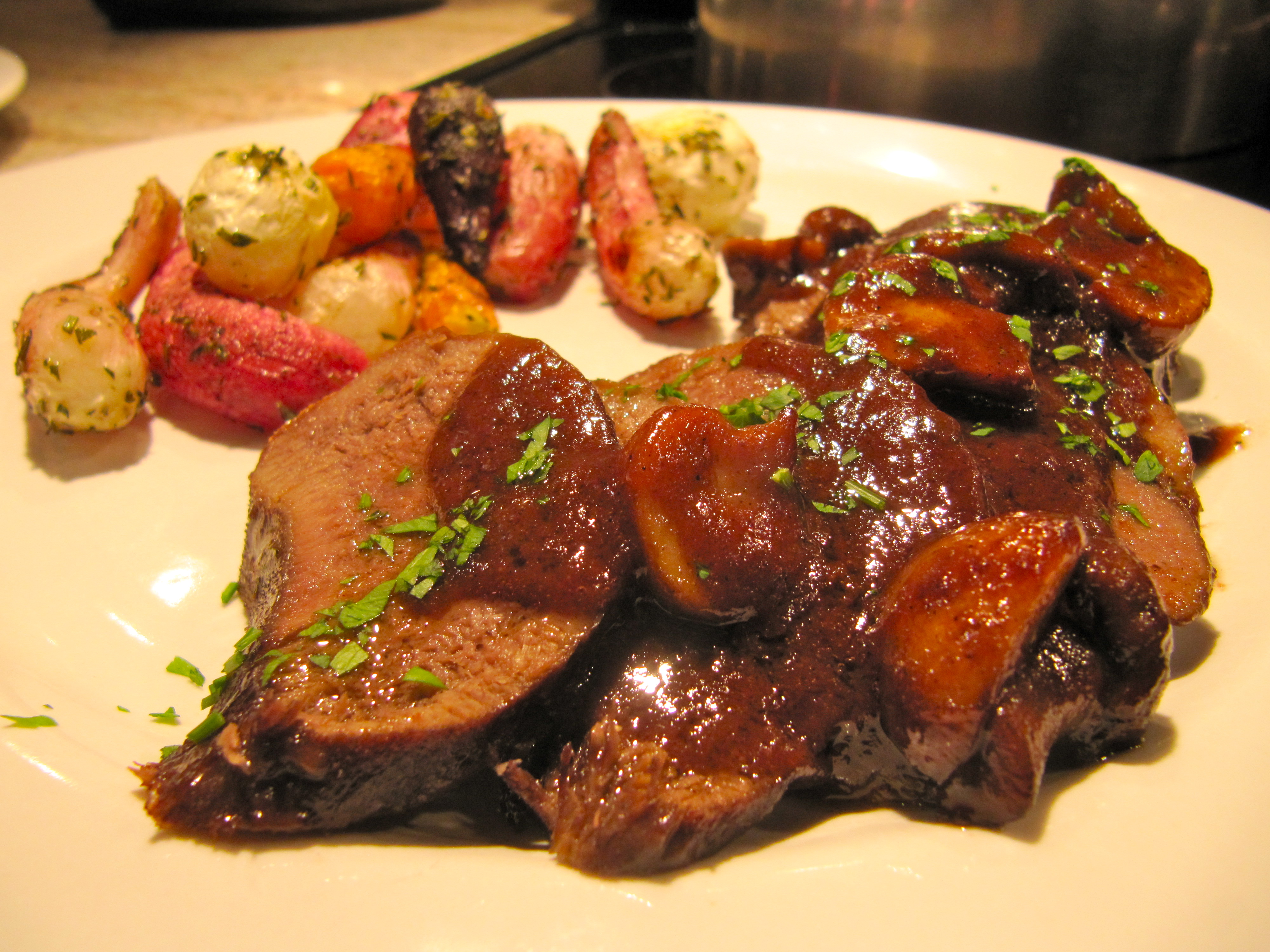
    I let everything simmer on low heat for 4 hours, turning the tongue a couple times and making sure there was enough liquid in the pan. I removed the tongue and strained the braising liquid. I returned the liquid to a pan and added some roux to thicken it into a sauce. I sauteed some Small Kine Farm baby portabella mushrooms in butter, then added them to the sauce. I put the tongue in with the sauce and mushrooms and warmed it back up. For service, all I had to do was remove the tongue, slice it, plate it, top it with the sauce, and serve with the root vegetables.

    Roasted MA’O baby root vegetables:
    1 pound baby turnips, radishes, beets, carrots
    thyme (3 sprigs)
    rosemary (1 sprig)
    Hawaiian sea salt
    black pepper
    extra virgin olive oil

    I went with a simple roast for the root vegetables. I scrubbed them in the sink, removed the tops and bottoms, and tossed them in the olive oil, salt, pepper, thyme, and rosemary. They were ready to party after about 30 minutes in a 400 degree oven.

    I was extremely satisfied with how the meal turned out. A knife was not required for the tongue, the sauce was very rich and flavorful, and the vegetables were crisp and delicious.

  • I enjoy pasta…a lot… I typically make pasta a couple times a week and usually sauce it with some sort of ragu. Hawai’i has come a long way in the past few years and I’m able to source most of the vegetables I use locally. Meat is another story. There is not a single butcher shop on Oahu. Finding local meat is no easy task. Unfortunately, I buy the majority of my meat from Safeway; more specifically, from the small section of soon to expire meat that is discounted 30-50 percent at the Manoa Safeway. I buy whatever is looking the best and the best value. Today there were some nice looking bone-in rib eyes and I took one home with me to make a ragu.

    Rib Eye Ragu:
    rib eye steak (1.25lbs, bone-in)
    roma tomatoes (16 small/medium from Ho Farms)
    onion (small from Pit Farm)
    carrot (1 purple, 1 yellow from Pit Farm)
    celery (1 stalk from Pit Farm)
    garlic (2-3 cloves)
    chili (2 Hawaiian chilis from pit Farm)
    fresh herbs (minced rosemary, sage, basil, parsley and a bay leaf from garden)
    wine (1/2 cup or so, i used prosecco that had gone flat)
    olive oil
    salt and pepper to taste

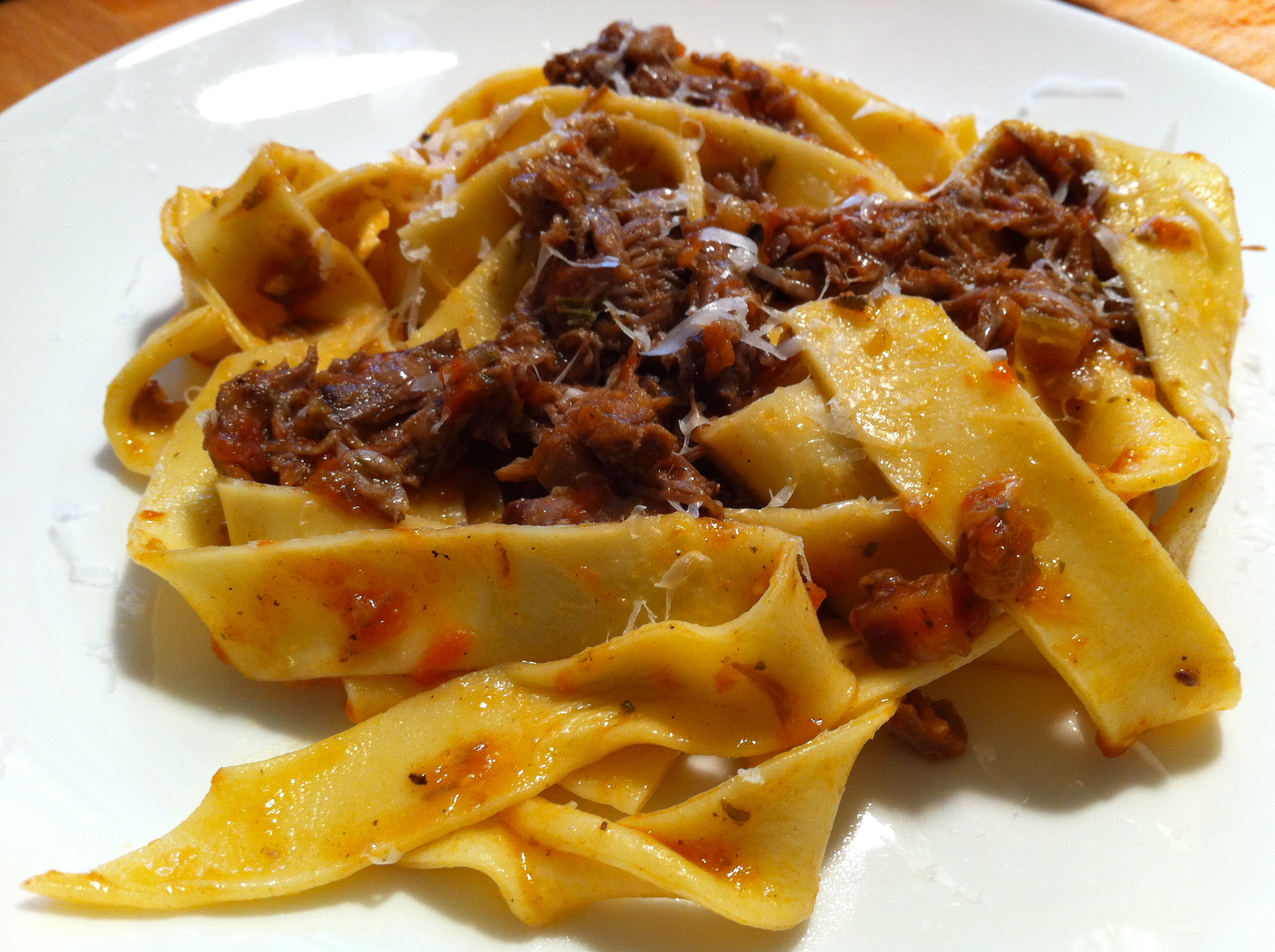
    Cut the steak into chunks and brown them and the bone in olive oil. I like to get everything nice and brown. While browning the beef, I took care of the tomatoes. I cut a small x onto the bottom of each tomato, emerse them in boiling water until the skin begins to peel, then submerge them in an ice bath. Next, I remove the skin, seeds, and base of stem, then chop them up finely. Once the beef is browned to your liking, add the onions, carrot, and celery. I chop my mirepoix very finely, how you do it is up to you. Once the mirepoix is soft and looking ready, I add the garlic. The garlic cooks fast and I drop the herbs in just before the garlic is done. Once everything is ready, I deglaze the pan with wine, then add the tomatoes. I like heat and drop a couple chilis in to give the ragu a kick. This concludes the active cooking part of the sauce. All you have to do now is reduce the heat to low, stir occasionally, and add water if things get too dry. I usually simmer my sauces for 4+ hours, but was in a bit of a rush today and was only able to simmer for a little over 2 hours. It was long enough for the meat to become fork tender and that’s all you really need. I removed the bone, the chilies, and the bay leaf, pulled apart the steak, and made sure the ragu was properly seasoned. Since I made ravioli the day before, I went with quick and easy hand cut pasta to go with the ragu.

    Pasta
    00 flour (about 3 cups)
    eggs (3 local eggs)
    olive oil (splash)
    water (splash)
    salt (pinch)

    I put 1 cup of flour, the eggs, salt, and the olive oil into my kitchenaid stand mixer and blend well, then add the rest of the flour. Add flour or water until proper consistency is achieved. The dough should no longer be sticky, but not be dry enough to fall into a bunch of little pieces. Once the dough is looking good, I let the mixer do its magic for 10 minutes, then wrap the dough in plastic, and allow it to rest for at least 30 minutes. I run the dough through my manual pasta machine and stop at number 6 or 7 depending on which type of pasta I’m making. My machine starts at 0 and the highest number (thinnest pasta) is 9. Since I was going with a rich, heavy sauce, I went for a thicker pasta to absorb the goodness. Once the pasta is rolled to the desired thickness, I flour both sides, fold it over itself a couple times, and cut it with a knife. I usually do strips a little under a half inch wide. My personal preference is for wider, thicker noodles. After the noodles are cut, I unfold them and toss them on a floured surface. It only takes a few minutes for the pasta to cook. Once the pasta was cooked, I tossed it with the ragu, and topped with freshly grated pecorino.

    The outcome: I make a lot of ragus and a lot of pasta, so I’ve had plenty of practice. The practice pays off and I had another delicious meal. The rib eye ragu really tasted like rib eye and was quite good. The pasta was its normal, wonderful self.

  • It looks like I won’t be doing any traveling until my financial situation drastically improves. In the meantime this blog will be based on things I do at home in Hawaii. One of those things is cooking and I’m going to start sharing what I make and how I make it. I apologize for the lack of pictures and will try to start taking some action shots in the future.

    Last Saturday I picked up 1/2 a kabocha pumpkin from my favorite vendor at the farmers market, Pit Farm. I’ve made kabocha ravioli in the past and decided to do something other than tossing it in a brown butter sage sauce this time. One of my pantry items at home is Kukui Italian Sausage. While I would prefer to make my own, Kukui is locally made and good enough for me. I use it a lot for all kinds of different stuff and it’s handy to have on hand. I thought that adding sausage to the filling would compliment the pumpkin well.
    While at the farmers market, I also picked up some purslane from Otsuji Farm, without knowing what I would do with it. My only encounters with purslane have come in salad form and I decided to see how it would work in a pesto. When I went to Whole Foods to pick up pine nuts, they were sampling a deliciously creamy goat cheese, le picandou, that found its way into the pesto. Meyer lemons are currently going off on Oahu and my roommate obtained a big bag of them from a friend’s tree.
    Needless to say, I got my hands on some pretty great ingredients. My only goal was not to mess them up!

    Ravioli dough:
    00 Flour (around 3 cups)
    3 Eggs (local of course)
    Kabocha (about 1/2 cup roasted and mashed)
    salt (pinch)
    extra virgin olive oil (little splash)

    For the dough, I mix everything in my Kitchenaid stand mixer. I add more flour or olive oil depending on the consistency of the dough until it is no longer sticky, but not quite falling apart into a bunch of small pieces. Once the desired consistency is reached, I let the machine work the dough for about 10 minutes, wrap the dough in plastic and let it rest for about an hour. I incorporated a little kabocha to get some extra pumpkin-ness and brighten the color of the pasta.

    Ravioli filling:
    Kabocha (1/2 of a kabocha, but didn’t use all)
    Sausage (8oz Kukui Italian Sausage)
    Sage (a dozen or so leaves from my garden, finely chopped)
    Nutmeg
    Salt and pepper to taste

    I covered the squash in olive oil, sprinkled some salt and pepper, and grated fresh nutmeg, then roasted for about 40 minutes at 325. I removed the casings from the sausages and, since they are pre-cooked, diced them up before browning. I browned the sausage in olive oil and added the sage just before they were done. I combined the squash and sausage/sage mixture in a food processor with a little more freshly grated nutmeg and the filling was ready.

    Pesto:
    Purslane (a few cups maybe? washed and thick stems removed)
    Meyer Lemon (juice and zest of 1/2 a lemon)
    Goat Cheese (a couple ounces of le picandou)
    Pine Nuts (1/3 of a cup-ish, toasted)
    Garlic (2-3 cloves)
    Extra Virgin Olive Oil
    Salt and Pepper to taste

    Pesto is really easy. I drop the first 5 ingredients into the food processor, then gradually add olive oil until it reaches my desired consistency.

    The outcome: It came out really well. The flavors were great and complimented one another nicely. My dining companion has lactose issues, so I took it easy on her and didn’t add any cheese to the filling. As a result, the ravioli filling was a little dry. If I make it again, I will put some of the goat cheese in the filling. The meyer lemon was REALLY juicy and I could have used a little less juice than I did. It was a little tart, but nothing overboard and it lightened up the pesto in a nice way. Overall, I was very happy with the dish and would make it again.

  • I recently had the opportunity to take part in a cheese making workshop with my local Slow Food chapter at Naked Cow Dairy in Waianae on Oahu’s leeward side. Two sisters, Monique and Sabrina, own and operate Oahu’s only dairy, where they produce buttermilk, yogurt, butter, and cheese. The only cheese the ladies have been taking to market has been (cow milk) feta. This workshop was meant to test a variety of other cheeses and see how they fare with Naked Cow’s milk and our climate. We made camembert style, gouda style, ricotta, crescenza, and yogurt cheese.
    I had never made cheese before and jumped at the opportunity to take part in the workshop. Making the cheese itself was a lot of fun, but involved quite a bit of waiting. The ricotta and yogurt cheese were ready for immediate consumption and came out very well. We are a couple months away from sampling the gouda and camembert style and I’m really looking forward to tasting the fruits of our labor. For now, the cheese is being aged in a modified wine fridge, but the ladies are working on making a commercial scale aging chamber in the near future. Producing added value products like cheese, will help Naked Cow become profitable and grow.
    We had a delicious lunch that included great local produce as well as some treats that our Slow Food leader, Gida brought back from France. The dairy is set in a beautiful part of the island and we were there for another spectacular Hawaiian sunset. I could not have asked for a nicer location, more welcoming hosts, better company, or a more perfect first experience cheesing it up. Naked Cow is now taking part in agritourism and it is definitely worth a visit to come and experience Oahu’s only dairy.

    This slideshow requires JavaScript.

  • Anthony Bourdain is coming out with a new show called “Layover” where he spends a day or two in a major airport hub and makes the most of it in terms of eating. I deliberately bookmarked this trip with a layover in Taipei on the way from Hawaii to Bangkok and a layover in Seattle on the way home from Paris with the same intention, before I had heard of the concept for the show. Arriving at 5pm and leaving at 5pm the next day, I had exactly 24 hours in the Emerald City. I stayed at the Green Tortoise Hostel in the center of the city just across from Pike Place Market. It was one of the nicest hostels I have ever stayed at and the location can’t be beat.
    Seattle has a number of great restaurants and I decided to go with Spur because it was a short walk from where I was staying. I budgeted remarkably well for the trip overall and had a small surplus, so I decided to go big on dinner. I had the eight course tasting menu with cocktail pairings. It was one of the greatest meals of my life and rivaled the best of what I had to eat in Europe and Asia. The cocktails were as well thought out and tasty as the food. The staff was friendly, knowledgable, attentive, and loved food.
    Seattle is known for its coffee culture and I checked out two of the best cafes in the city, Vivace and D’Arte. I don’t have a very sophisticated coffee palate, but thoroughly enjoyed my beverages at both places. For lunch I went to Armandino’s Salumi. Mario Batali’s dad’s place is very popular and I was sure to get there early to avoid a long line. I had a delicious porchetta sandwich and took a salumi and cheese for the plane ride home.
    I spent my last few hours in Seattle walking in and around Pike Place Market. The place is really cool and like a gigantic Ferry Building. I bought some wild chanterelles, brussels sprouts, and other goodies I can’t get in Hawaii to take back home.
    This was my second time to Seattle and the first time was more than 5 years ago. I was only there 24 hours this time, but it was long enough to reserve a place in my heart for this wonderful city. A drab, gray, rainy place was full of incredibly nice people, world class coffee, and a vibrant food scene. I boarded my plane very full, very happy, and eager to come back and taste more of Seattle!

    This slideshow requires JavaScript.

  • Paris was my final destination in Europe before heading home to Hawaii. The City of Light was also the last stop on my last Euro-trip 2 years ago. That time I visited the Eiffel Tower, Notre Dame, the catacombs, and did a lot of the must-do touristy things. This time around, I would only be in town for 3 nights and 2 full days and decided to try to casually soak up a little of the city rather than run around it looking at sights.
    Home base for me was just outside of the city limits to the south in a place called Arcueil where I had yet another great Couchsurfing experience. Thanks Viet! My host Viet’s place was a few minutes walking from the metro and I could be in the heart of paris in less than 15 minutes.
    Paris is home to some of the best restaurants in the world and I made sure to budget some money for a proper meal or two. I thought I had made a reservation for Pierre Gagnaire’s 3 star place, but when I showed up they informed me that I had booked for Gaya, his more casual restaurant. It was disappointing to not get to eat at one of Paris’ best restaurants, but my meal at Gaya was amazing. I had the menu of the day, which consisted of a cold mussel and bean soup, roast chicken with mushrooms, and a tart but delicious dessert. The flavors were great and everything was executed to perfection. The wine was a perfect companion for the food.
    Honolulu lacks diversity in non-Asian ethnic eateries. Our only Ethiopian place was a short lived pop-up that had a degree of sourcing difficulties. I took advantage of multicultural Paris and had the best Ethiopian food of my life at Queen of Sheba. The injera was so sour and so good.
    My “last supper” and biggest splurge meal of the trip was at Passage 53. A friend of mine joined me and we did the tasting menu. It was one of the best meals of my trip and Passage 53 lived up to the hype. The dishes were creative, flavorful, and well balanced. The “white dish” consisting of squid and cauliflower stood out visually and taste-wise. Thanks to Ono Kine Grindz for yet another great recommendation.
    I had a brief, but really nice stay in Paris. Just as before, the people were great, the food was amazing, and it was difficult to leave this special city. Paris was an ideal last stop on this great adventure and I hope to visit again in the future!

    This slideshow requires JavaScript.

  • My final WWOOFing experience of this trip was different from the previous two, but, like the others, I learned a lot and had an amazing time. As in the Drome, my WWOOF host in Dordogne was an English teacher. Corinne was covering for her mom, who was in Korea for a Slow Food conference, as WWOOF host and couldn’t have done a better job. She lives in a beautifully restored farmhouse in the southwest of France that features a large organic garden as well as some fruit and nut trees. The barn has been restored and is rented to visitors. Of course no one was booked for the time I was there, so I got some very nice accommodations.
    Corinne makes sauces and chutneys with some of the fruits and vegetables from the garden and sells them at Christmas markets. I got to make this year’s batch of fig chutney and chili tomato sauce for her. I also prepared a few meals. It was a pleasure cooking in her kitchen. The place was equipped with a professional quality range, heavy pots and pans, and an island that was more of a continent. My more conventional WWOOF duties were harvesting beans, tomatoes, figs, and walnuts.
    Corinne left me her car to use to explore the countryside while she was at work. Her car was a stick and I had never driven one before, managed to get around with only stalling a few times. I went to some great open air markets, the Saturday market in Thiviers being the biggest and best. I also visited a cool cave in Tourtoirac, but they didn’t allow cameras.
    The Dordogne is duck country and I made sure to sample the local delicacies. I had a couple very nice and inexpensive lunches in neighboring towns during the week. On my last night, Corinne and I went to the only restaurant with a star in the area, L’Imaginaire. The food was very good, but not life changing. We both opted to get the 25euro lobster supplement as our main. It was tasty, but not the best value. Overall, the meal was good, but not great. The company made up for any shortcomings in value.
    The highlight of my time in Dordogne was when Corinne took me to her school. I told her how I went to school with my previous WWOOF host and she decided to give it a shot. She teaches at one of the top hotel management colleges in Europe and was covering the role of food critics and food bloggers with her students. I talked with her students about those subjects and the Hawaii food scene. The students were great and the day went really well. They even invited me to a party that night. I had a great time at the party. They were all extremely nice and excellent hosts.
    My week in Dordogne flew by and it was very hard to leave. All of the students (especially you, Arthur) were great and I hope to keep in touch with them. Corinne could not have been a better host and made me feel very welcome. Dordogne is a place that I would like to come back to and spend more time. It was everything I hoped the French countryside to be and more. The people made a beautiful place a special place; a place I fell in love with.

    This slideshow requires JavaScript.

  • My second WWOOFing experience took place in the “Tuscany of France,” the Drome. Located just above Provence in the southeast of France, the climate and environment was very similar to its Italian counterpart. Though different than my time spent WWOOFing in the Tuscany of Italy, this experience was very special and taught me a great deal.
    The beginning of the story was funny. I arrived at the wrong farm through a series of miscommunications and coincidences, but things worked out for the better. My wonderful host, Odette, was kind enough to take me in despite having declined my request to WWOOF at her place and having another WWOOFer arriving on the same day.
    This time WWOOFing included very little field time. WWOOFing doesn’t necessarily mean laboring in a garden and can include a variety of other activities. I got to help out a little in the kitchen and in the garden, but most of my “work” was done away from the farm.
    Odette teaches at a forestry school and brings her WWOOFers to class to talk to her students about where they come from and places they have traveled to. I really enjoyed talking to her students about Hawaii and my current trip. They were attentive, polite, and kind enough to feign interest while I blathered away. I was thoroughly impressed with both the faculty and the students and wish I could have spent more time with them.
    One day Odette took us to a butcher/cheese/wine shop after school. It was the single greatest seller of things I love that I have ever been to. They had every part of every animal, a variety of house made pates, terrines, and sausages, a killer assortment of cheese, and a wine selection that can hold its own anywhere. This place makes Eataly look like a 7-11. The sommelier was outstanding and hooked me up with a few bottles to take back home. I could have spent hours/days in this place.
    My co-WWOOFer, Julia, and I had a nice day trip to Avignon. When we returned to Montelimar, we had dinner at one of Odette’s friend’s house. This friend also hosts WWOOFers but didn’t have any at the moment. Along with her husband, she converted an old stone barn into a very beautiful home. If I hadn’t just met them, I would have taken pics of their house. It was that nice. We had a great meal featuring homemade pate, seafood gratin, and three local wines.
    There is one restaurant in Odette’s beautiful little town of St. Marcel les Sauzet. Le Priorie received two Michelin forks, which are the small-scale equivalent of a star. I had an excellent meal there that included foie gras three different ways, veal kidneys and sweetbreads, and a beautiful dessert.
    Odette is a dedicated nature lover and took Julia and I on a couple hikes. The first place she took us is full of fossilized seashells despite being hundreds of kilometers from the sea. She pointed out many of the local plants and taught us quite a bit about the environment surrounding her home. Wild thyme, fennel, rosemary, and juniper seemed to be everywhere.
    For my last night in town, Odette’s son Olivier took Julia and I to a house party. It was nice being around people my age and they were all incredibly nice. In fact, everyone I came across in the Drome was beyond nice. I can’t recall a place I’ve been to that had nicer people.
    My week spent in the Drome seemed like a (very long and full) day. We squeezed a lot of things into a small amount of time and I enjoyed every second of it. Odette was an incredible host and I am truly thankful that she took in an accidental WWOOFer and showed him how she lives. The beauty of the Drome is only surpassed by the kindness and hospitality of its inhabitants. It was a week I will never forget.

    This slideshow requires JavaScript.

  • After a really great three days helping Odette at school, she gave my co-WOOFer Julia and I Friday off. Odette recommended we visit nearby Avignon and we followed her advice. Avignon is a beautiful medieval city that is about one hour by train from Montelimar.
    The city is most well known as being the home to some Popes for a period of time in the 14th century. Our first stop in the city was a visit to the Palais de Papes. It is a very big compound that is more fortress than palace. The real Pope’s house is much more beautiful, but it was cool walking around the French equivalent.
    The other big tourist attraction is the real “bridge to nowhere,” the bridge of Avignon. The city is bordered to the north by the Rhone and the partial remains of an old bridge can be accessed (from one side only) for a small fee. There are a couple museums and cathedrals in Avignon, but we opted to walk around the city and admire the gothic architecture instead. There are also canals, some of which have old mills that were used to power something.
    Now for the important part, lunch. I did my usual research for dining options and decided on going to Numero 75. It is an upscale, but not crazy-upscale place that serves up some really good food. It was very hard walking past several much cheaper places that looked great and were packed with locals enjoying their lunch, but I’m happy I tried Numero 75. I had a foie gras starter and braised pig cheek for my main. Dessert was a pastry with sea salt caramel butter cream, raspberries and raspberry sorbet. The food was really good and the service was outstanding.
    My time in Avignon was short and highlighted with a delicious meal. It was similar to the few hours I spent in Siena, but I preferred Siena’s scenery and food. Avignon was still beautiful and is a place I would go back to.

    This slideshow requires JavaScript.